

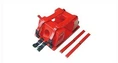


The tourniquet hemostasis method mainly uses a rubber tube or a rubber tube to stop the blood vessels to achieve hemostasis. This method of hemostasis is more robust and reliable, but it can only be used for hemorrhage of the extremities.
1. Use of the tourniquet ligation method rubber tourniquet: use the rubber band in the left hand, about 16cm in the back to stay; right hand tightly looped body, front left hand, middle finger two fingers, pull down the limb, insert the front ring, Guaranteed not to be loose. If you encounter major bleeding in the extremities, you need a tourniquet to stop bleeding, and when there is no rubber tourniquet on the spot, you can take materials on site, such as cloth tourniquet, wire rope or hemp rope. When using a cloth to stop the bleeding, put it into the ring and tighten it. When hemostasis with a cord or hemp rope, it can be tightened.
2. Problems to be aware of when using a tourniquet
(1) The tourniquet should be placed near the heart of the wound. The upper arm and thigh should be stretched over the upper 1/3. The upper third of the upper arm prohibits the upper tourniquet so as not to oppress the nerve and cause paralysis of the upper limb.
(2) Before the upper tourniquet, use a towel or other cloth or cotton wool pad. The tourniquet should not be directly attached to the skin. In an emergency, the trousers or cuffs can be rolled up and the tourniquet is tied to it.
(3) It is necessary to tie tightly, too tight to damage the nerves, too loose to achieve the purpose of stopping bleeding. Generally, it is impossible to touch the distal artery pulsation or stop bleeding.
(4) Ligation time is too long, can cause limb ischemia and necrosis. Therefore, relax every 2 hours (upper or lower limbs) for 2 to 3 minutes; during relaxation, use finger pressure to temporarily stop bleeding. Relax every 30 minutes during the cold season. If the ligation site is more than 2 hours, it should be replaced with a higher position than the original one. (5) To have a mark on the upper tourniquet, indicate the time and location of the upper tourniquet. The wounded with hemostasis to stop bleeding should be sent to the hospital as soon as possible to prevent the distal limbs of the bleeding from causing necrosis due to ischemia.