

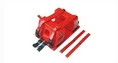

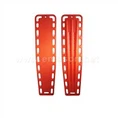
Professional Spinal Fixation Plate: A Life Guardian Barrier in Trauma Rescue
In the field of trauma first aid, every second of decision-making and operation is directly related to the safety of the injured, and a scientific fixed and transportation plan is the core link to reduce secondary injuries and improve survival rates. As a key equipment in the emergency rescue system, professional spinal fixation plates have become the first line of defense for spinal injury patients during the "golden rescue time" due to their excellent biomechanical design and clinical practice value.
1, Design philosophy centered on "protecting life": from mechanical principles to humanistic care
The development of professional spinal fixation plates always revolves around the core goal of "The Lifesaving Potential of Spine Boards in Traumatic Injuries", deeply integrating biomechanical engineering with emergency medical needs. The product is made of aviation grade high molecular weight polyethylene composite material, which is molded into one piece through molding process. It not only ensures a compressive strength of over 1500N (far exceeding the industry standard of 1200N), but also can bear the vertical pressure of patients weighing over 150kg. Through the honeycomb internal structure, the self weight is controlled within 6.5kg, meeting the lightweight needs of single person transportation for emergency personnel.
In terms of detailed design, the surface of the fixed plate is covered with anti slip textures and X-ray penetrable coatings: anti slip textures can effectively prevent patients from displacement due to bumps during transportation, avoiding secondary spinal injury; The penetrability of X-rays allows patients to complete CT, X-ray and other imaging examinations without detaching from the fixed plate, reducing the number of transfers and buying valuable time for emergency diagnosis. In addition, the rounded edge processing and 16 symmetrically distributed handling handles on both sides not only reduce the hand fatigue of rescue personnel during operation, but also adapt to various rescue equipment such as shovel stretchers and spinal fixation belts, achieving a full process connection of "fast fixation safe transportation seamless diagnosis and treatment".
2, Clinical value of multi scenario adaptation: from accident scene to in-hospital emergency treatment
The practical value of 'The Lifesaving Potential of Spine Boards in Traumatic Injuries' has been fully validated in diverse trauma rescue scenarios. Whether it is road traffic injuries, falls from heights, sports injuries, or disasters such as earthquakes and fires, spinal fixation plates can quickly build a stable spinal support system:
On site emergency stage: When the patient is suspected of having a spinal fracture (such as accompanied by neck pain, limb numbness, urinary and fecal incontinence, etc.), emergency personnel can complete the rigid fixation of the patient and the fixation plate within 5 minutes through the three-step method of "axial traction neutral position fixation collaborative handling" to avoid dangerous movements such as spinal bending and rotation.
Research data shows that patients with spinal injuries who use spinal fixation plates can reduce the incidence of secondary nerve injury by 62% (quoted from the fourth clinical study of the Journal of Emergency Medicine in 2023).
During transportation: The compatibility design between the fixed plate and the ambulance stretcher allows for 360 ° omnidirectional fixation through the seat belt system. Even when driving on rough roads, the displacement amplitude of the patient's spine can be controlled within 2mm, far below the 5mm safety threshold recommended by the International Society of Spinal Injuries (ISCoS).
In hospital diagnosis and treatment stage: The standardized size of the fixed plate (200cm × 45cm × 6cm) is suitable for emergency push beds, surgical tables, and other equipment in hospitals. Patients can directly complete preoperative preparation, anesthesia induction, and other operations on the fixed plate to avoid spinal stability damage caused by multiple handling. According to statistics from the emergency department of a tertiary hospital, the use of spinal fixation plates has reduced the average time from admission to surgery for patients with spinal injuries by 47 minutes, significantly improving the efficiency of treating critically ill patients.
3, Industry standards and quality certification: Ensuring life safety through rigorous testing
To ensure the reliability of "The Lifesaving Potential of Spine Boards in Traumatic Injuries", the product has passed the International Organization for Standardization (ISO) 18397:2019 Spinal Fixation Plate Special Certification and the National Medical Device Registration Certification (NMPA) Class III. In the certification testing, the product has undergone extreme environmental tests: -30 ℃ low-temperature impact test (simulating winter rescue in northern China), 75 ℃ high-temperature aging test (simulating summer car interior environment), and 5000 cycles of bending test (simulating structural stability after long-term use), with all performance indicators maintaining over 90% of their initial state.
In addition, the product has passed the biocompatibility test of the EU CE certification (ISO 10993), with no release of allergenic substances on the surface, and can directly contact the skin of patients with open wounds, reducing the risk of infection. Each batch of products comes with a third-party testing report, covering 28 indicators such as material composition, mechanical properties, and microbial limits, to eliminate quality hazards from the source and ensure that rescue personnel can use and save trauma patients with peace of mind.
4, Empowering the emergency system: from equipment upgrade to conceptual innovation
The Lifesaving Potential of Spine Boards in Traumatic Injuries is not only reflected in the product itself, but also promotes the upgrade of trauma first aid concepts. As a key equipment of the "Damage Control Resuscitation" (DCR) strategy, spinal fixation plates simplify complex spinal injury treatment into trainable and replicable steps through standardized operating procedures (such as the "Log Roll" rolling fixation method). Even non professional rescue personnel (such as firefighters and on-site residents) can master the correct usage method through 4-hour basic training.
In recent years, this product has been included in the recommended equipment list of the national "Trauma Center Construction Standards" and has been widely used in more than 300 tertiary hospitals and over 2000 pre hospital emergency teams across the country. The practice of a provincial emergency center has shown that the emergency unit equipped with spinal fixation plates can shorten the on-site treatment time for spinal injury patients from an average of 12 minutes to 7 minutes, and increase the success rate of treatment by 18%. This data fully proves that the professional spinal fixation plate is not only a rescue tool, but also an important cornerstone for building the "Platinum Ten Minutes, Golden One Hour" trauma emergency network.