



Stretcher transport method
Purpose
Transport patients who cannot get up for examination, treatment, etc. Especially in the process of first aid, stretcher is the most basic and commonly used tool for transporting patients. It is characterized by comfortable and stable transportation of patients, convenient up and down when taking various transportation vehicles, and little influence on body position.
Preparation before operation
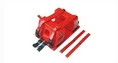
Racket-vice (usually canvas stretcher is used, if on-site first aid is short of parry, wood board can be used instead). The stretcher must be padded with soft pads, and other materials are transported to the flat car.
Operating Steps and Key Points
1. Three-person handling method
(1) The carrier is located on the same side of the patient. A holds up the patient's head, neck and shoulder with one hand-holds up the patient's waist with the other hand. B and C hold up the patient's buttocks and lower limbs respectively. The sober patient told him to wrap his hands around the neck of the carrier, and both of them pressed hard at the same time, lifting the patient gently and slowly on the stretcher.
(2) Cover the quilt well, and the patient will take the recumbent position.
(3) Patients with craniocerebral injury, severe facial trauma and coma should turn their heads to one side.
The three must cooperate and coordinate, correctly apply the principle of human mechanics, and keep the limbs of the patient away from the edge of the stretcher, so as not to cause injury due to collision. Keep respiratory tract unobstructed to prevent choking caused by falling behind tongue and blocking respiratory tract, or inhaling secretions and vomitus into trachea; Pay close attention to the changes of illness during transportation at any time.
2. Rolling handling method
It is suitable for patients with thoracic and lumbar injuries and patients with thoracic and lumbar injuries to use hard board stretchers.
(1) straighten and close the limbs of the patient, move to the bedside, and place the stretcher beside the patient.
(2) The porter is located on the same side of the patient. A supports the patient's head, neck and chest, B supports the patient's waist and buttocks, C supports the patient's lower limbs, and three people roll carpets or round wood samples at the same time to make the patient roll towards parry as a whole.
(3) Kosei patient is located in the center of the stretcher, taking the supine position and covering the quilt. The patient shall lie on his back, with a small pillow or clothing about l0cm thick under the injured thoracolumbar spine. If it is a canvas stretcher, the patient shall be allowed to lie on his stomach to straighten the spine.
3. Pinto method
It is suitable for patients with cervical vertebra injury.
(1) The carrier stands on the same side of the patient and stretcher and moves the stretcher to the patient's side.
(2) One or two people in the hospital hold up the patient's head and neck, while the other two hold up the patient's chest, waist, hip, upper and lower limbs respectively. The carrier holds up the patient horizontally with the head in a neutral position, and slightly drags the neck along the longitudinal axis of the body or the patient himself holds up the head with both hands and slowly transfers it to the stretcher.