


Purpose:
First aid fixation is mainly for temporary fixation of fractures to prevent secondary injuries caused by the activities of fracture ends to stab blood vessels, nerves and other surrounding tissues, reduce pain, and facilitate rescue, transportation and handling.
Item preparation:
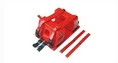
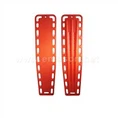
splints or fixing frames made of wood, iron and plastic.
Use local materials and select suitable simple and convenient materials such as wood boards, bamboo poles, branches, cardboard, etc.
Operating steps:
Upper arm fracture fixation: Place the splint on the outer side of the fractured upper arm and fix it with bandage; Then fix the shoulder and elbow joints, fold one triangle towel into a dovetail type to suspend the forearm in front of the chest, and tie another triangle towel around the affected limb and under the armpit of the healthy side. If there is no splint fixation, the injured limb can be fixed to the thorax with a triangular towel first, and then the injured limb can be suspended in front of the chest with a triangular towel.
Forearm fracture fixation: Place splints on the four sides of the forearm, then fix the wrist and elbow joints, bend and suspend the forearm in front of the chest with a triangular towel, and fix the injured limb to the thorax with another triangular towel. If there is no splint fixation, the injured limb is first suspended in front of the chest with a triangular towel, and then the injured limb is fixed to the thorax with a triangular towel.
Femoral fracture fixation:Limb-strengthening fixation:
the lower limbs are tied together with bandages or triangular towels, and cotton pads are added at the knee joint, ankle joint and the space between the legs.
torso fixation method: use long splints from heel to armpit, and short splints from heel to thigh root, respectively placed on the outer and inner sides of the affected leg, and use bandages or triangular towels to bind and fix the medical education network.
Fracture fixation of lower leg: two splints with length from heel to middle thigh are respectively placed on inner and outer sides of lower leg, and then fixed with triangle towel or bandage. The affected limb can also be fixed to the healthy limb with a triangular towel.
Spine fracture fixation: Lay the wounded on the board and fix the neck, chest, abdomen, iliac and ankle on the board with bandages.
Note:
The wound should be hemostasis, disinfection, bandaging, and then fixed.
Before fixing, soft materials such as cloth, cotton and towel should be used to pave the plywood to avoid skin damage.
When the splint is fixed with bandage, it should be wrapped from the lower part of the fracture to reduce congestion and edema of the affected limb.
The splint should be placed under or on both sides of the fracture site, and one joint should be fixed up and down.
Fractures of thighs, calves and spine should not be moved at will, but should be temporarily fixed locally.
The fixing should be elastic and appropriate.