



Revolutionize Patient Safety with Our Premium Spine Board: The Ultimate Guide to Effective Immobilization
In the high-stakes world of emergency medical care, every second counts. When a patient suffers a suspected spinal injury, improper handling can lead to devastating consequences, including permanent paralysis or worse. That's why our state-of-the-art spine board is engineered to be the gold standard in patient immobilization, combining cutting-edge design with unparalleled reliability. Designed for paramedics, first responders, and healthcare facilities, this spine board ensures that how to properly immobilize a patient using a spine board becomes a seamless, foolproof process.
Why Choose Our Spine Board? Unmatched Features and Benefits
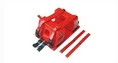
When it comes to immobilizing patients with potential spinal injuries, not all spine boards are created equal. Our premium model stands out through meticulous engineering and user-centric design, ensuring it meets the rigorous demands of real-world scenarios. Crafted from aerospace-grade, high-density polyethylene, this board is both lightweight (at just 8 pounds) and incredibly durable, capable of supporting patients up to 400 pounds without bending or cracking. Its radiolucent properties allow for unobstructed X-rays, enabling on-the-spot diagnostics without moving the patient-a critical advantage in trauma situations. The non-slip surface, enhanced with textured grooves, prevents accidental shifts during transport, while integrated handholds and strap anchors make it easy for teams to coordinate lifts and transfers.
But the benefits extend beyond hardware. By investing in our spine board, you're not just buying equipment; you're gaining peace of mind. Studies show that proper immobilization reduces secondary injury rates by up to 70%, and our board's ergonomic design minimizes responder fatigue during prolonged use. This translates to faster, safer evacuations in diverse environments, from car accidents to wilderness rescues. Moreover, it's compatible with all major cervical collars and extrication devices, ensuring seamless integration into your existing protocols. For facilities aiming to boost compliance with OSHA and JCAHO standards, this spine board is a cost-effective solution that slashes liability risks. In essence, it empowers professionals to master how to properly immobilize a patient using a spine board, turning complex procedures into routine successes.
Step-by-Step Guide: How to Properly Immobilize a Patient Using a Spine Board
Mastering the correct technique for patient immobilization is non-negotiable in emergency care. Our spine board simplifies this process, but its effectiveness hinges on proper application. Below, we outline a comprehensive, evidence-based guide to ensure you can immobilize patients safely and efficiently. Remember, this procedure should only be performed by trained personnel, as errors can exacerbate injuries.
Preparation and Assessment: Before approaching the patient, conduct a rapid scene survey to identify hazards like traffic or unstable terrain. Don personal protective equipment (PPE) and gather your team-immobilization requires at least three responders for optimal control. Assess the patient's condition: check for responsiveness, breathing, and signs of spinal trauma (e.g., neck pain or numbness). If spinal injury is suspected, minimize movement immediately. Position the spine board alongside the patient, ensuring it's flat and secure. This initial step sets the foundation for how to properly immobilize a patient using a spine board, emphasizing that haste without caution can be catastrophic.
Log-Roll Technique for Board Placement: With one team member stabilizing the head and neck (using manual in-line stabilization), coordinate a synchronized log-roll to slide the board beneath the patient. This involves gently rolling the patient onto their side, just enough to insert the board, then lowering them back down. Our board's low-profile design (measuring 72" x 16") accommodates most adults, and its tapered edges reduce snagging. Once positioned, secure the patient with adjustable straps: crisscross straps over the chest, pelvis, and legs to prevent shifting, but avoid overtightening to ensure circulation isn't compromised.