

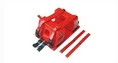



The Evolution of Safety Belts: From the Past to the Present
Safety belts have come a long way since their inception nearly 200 years ago. From simple lap belts to more advanced systems that protect passengers during collisions, safety belts have saved countless lives over the years.
The Early Days of Safety Belts
The first safety belt was patented in 1849 by Edward Claghorn. It was a simple lap belt designed to keep passengers in their seats during a stagecoach ride. Later, in 1885, Gustave Désiré Leveau patented a "safety vest" that included shoulder and lap belts. This design was the inspiration for future safety belt designs.
However, it wasn't until the 1950s that safety belts became standard equipment in automobiles. The first three-point safety belt was invented by Volvo engineer Nils Bohlin in 1959. This innovative design included a lap belt and a diagonal shoulder belt that crossed over the chest. The three-point safety belt quickly became the industry standard and remains in use today.
Advanced Safety Belt Systems
As technology has progressed, so have safety belt systems. In the 1970s, General Motors introduced the airbag, a supplementary restraint system that works in conjunction with seatbelts to protect passengers during collisions. Airbags have since become standard equipment in most vehicles.
In the 1990s, automakers began introducing seatbelt pre-tensioners and force limiters. Pre-tensioners work by tightening the seatbelt in the event of a collision, while force limiters relieve the pressure on the chest to reduce the risk of injury.
In recent years, automakers have introduced even more advanced safety belt systems. Some models now feature inflatable seatbelts, which inflate like airbags during a collision to provide additional protection. These belts are designed to distribute the force of impact more evenly across the chest and reduce the risk of injury.
The Future of Safety Belts
With advancements in technology, the future of safety belts looks promising. Automakers are working on developing new safety systems that utilize sensors and cameras to detect and prevent collisions before they occur. These systems will work in conjunction with existing safety belt systems to provide even greater protection to passengers.
In addition, some companies are exploring the use of smart fabrics in safety belts. These fabrics would be able to sense the level of force applied to them and adjust their tension accordingly. This would provide even greater protection to passengers during a collision.
